Running a Business as a Mother
By Girl BossEntrepreneurship7 min read
Paid leave for the self-employed exists in only two places so far; here is what they pay, the childcare money available everywhere, and the schedules founder mothers actually use.
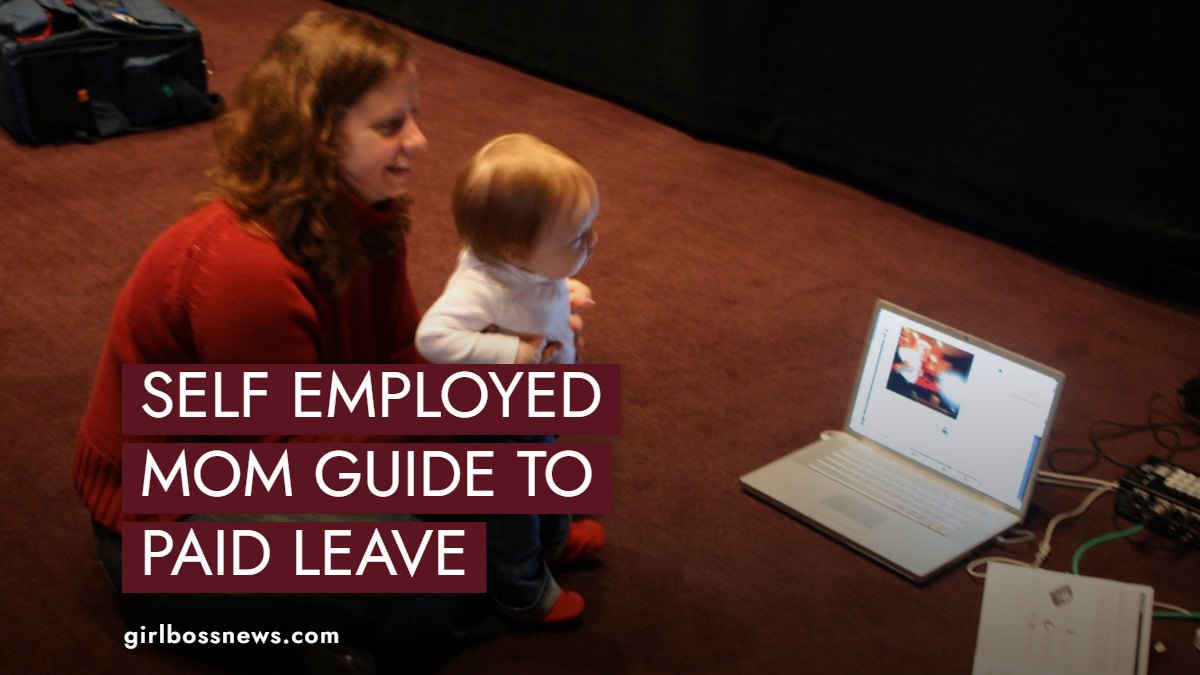
A woman asks the obvious question before she ever writes a business plan: who watches my child while I build this? There is no HR department to ask, no employee handbook with a maternity policy to flip to. What exists instead, scattered across tax code, state agencies and a few programs built by women who hit the same wall, is real, and worth collecting in one place.
Even outside self-employment, the ground is uneven. Surveys gathered on the treatment of pregnant women and new mothers at work found discrimination rates ranging from 30 to 77 percent, depending on the country. Leaving to build something of her own does not close that gap; it just changes who is responsible for closing it.
Here is the honest scope of what follows: only two places currently have sourced, workable paid family leave programs that a self-employed woman can opt into, Washington DC and New York. The childcare money and the schedules that make up the rest of this page apply wherever she lives.
Washington DC opens enrollment every fall
Washington DC's Paid Family Leave program is the first of the two places in this guide built with the self-employed in mind. Sole proprietors, independent contractors and partnership members can opt in if at least half of their self-employment work in the prior 52 weeks happened in DC. Open enrollment runs every year from November 1 through December 31, so a woman working on this right now is inside that window. A business started more recently gets its own door: enrollment within 60 days of first earning taxable self-employment income in DC.
The cost is modest and the payout recently grew. Participants pay 0.75% of their gross DC-based business income, billed quarterly, and as of October 1, 2026, the program raised its maximum weekly benefit to $1,100 for all claim types, along with changes to how long medical and family leave claims can run. Join in, and you are not locked in forever: after three years of participation, open enrollment is also your window to opt back out.
New York pays two thirds of income
New York is the second of the two, and its version pays well. A self-employed New Yorker enrolled in Paid Family Leave can receive 67% of her income, up to $1,228.53 a week in 2026, for twelve weeks of bonding leave in her child's first year.
Timing matters more here than almost anywhere else. Buy disability insurance and Paid Family Leave coverage within the first 26 weeks of starting the business, and the program is available sooner; miss that window, and enrolling later means a two-year wait before leave can actually be taken. The premium itself is not the obstacle: New York caps it at no more than $411.91 a year in 2026. The waiting is the cost here, not the price tag.
The child and dependent care credit
The oldest piece of this puzzle is the tax code, not a state program. For 2025 tax returns, the IRS's Child and Dependent Care Credit can cover up to 35% of employment-related child care expenses. To claim it, a taxpayer and her spouse, if filing jointly, need earned income for the year, which for a founder means the business itself counts. The credit is meant for care of a dependent under 13 so a parent can work or look for work, not a vacation or a favor. It will not fund a nanny by itself. It does lower what she owes every year she claims it.
Amber Grant's childcare category
Grant money built specifically around child care exists too. WomensNet's Amber Grant runs on one application: file it once, and a woman-owned business is automatically considered for that month's $15,000 grant and the matching $15,000 Business Specific grant for the same month. Education and child care gets its own $15,000 grant every September. WomensNet's own math puts the ceiling at $90,000 across the monthly, startup, category and year-end grants combined, a number worth knowing and worth treating as a ceiling, not an expectation. CalcMindset Innovations won the September 2026 Education & Child Care grant, the one real number behind the pitch.
Free help from the SBA women's centers
Not every form of support is cash. The SBA's nationwide resource partner network runs dedicated centers for women-owned businesses offering free counseling, training, mentoring and funding recommendations. SCORE's volunteer mentors give free advice on financing, human resources and business planning by email, phone or video, and anyone whose household includes a veteran, service member or military spouse has a parallel network in the Veterans Business Outreach Center program. None of this replaces income. All of it replaces guessing.
The freelancers nine to whenever
Ask a freelancer mother how her day is actually built, and the hours get specific fast. Sharla Farrell, founder of the PR firm Easy Consulting, works 7am to noon online, then spends her afternoons on TikTok doing research for clients. Finances were never her strength, she has said, so she hired an accountant to handle the receipts and books rather than teach herself. Serena Lalani, a freelance writer and content creator who left her job as a web producer in December 2020 to freelance full time, protects the rest of her week by scheduling meetings only on Mondays and Tuesdays and leaving everything after that meeting-free. Neither woman is working less. She is working on a schedule that was built, not inherited.
Creative directors who set their own terms
Sarah Yates Mora, Creative Director of A House in the Hills, slowed her business down after her son was born and kept it slow until he reached school age, choosing to be his primary caretaker in those years. Julie Van Daele, Creative Director of Well Received, has said that since becoming a mother she sets her own terms for when she works and who she works with. Not everyone finds the freedom easy: Erin Hiemstra, founder of Apartment 34, has said that without a fixed office start time, freelancing as a mother actually made it harder to structure a productive day. The flexibility is real. So is the discipline it demands.
Whichever shape the week takes, a Harvard report cited on the subject found that children of working mothers go on to have better careers, higher pay and more equal relationships of their own. The guilt is common. The research does not support it.
Two small rules from CEO moms
Christina Crawford, founder of Bubble Pop Beauty, works before her children wake up and after they go to sleep, treating those hours as the ones that are actually hers. She built a circle of friends who trade playdates, so the early, high-growth stretch of running a business did not mean doing it alone, and she keeps a running list of trusted babysitters so a date night or an evening with friends does not take weeks to plan.
Leana Greene, founder and CEO of Kids in the House, gets up 30 minutes earlier than her kids to avoid the morning crunch. Rather than chase more total hours with each child, she protects individual, one-on-one time with each of them every week. Quality, deliberately, over quantity.
The gig economy built its own safety net
Some of this infrastructure exists because one woman built it herself. Michelle Feiner launched Emissaries, a recruiting agency specializing in parental leave coverage, in November 2015, designed around a gig economy that was growing faster than U.S. leave policy was changing. Emissaries has never taken, and says it will not take, a cut of a freelancer's pay, a choice Feiner made to attract serious freelance talent to the network. In 2016 she planned to launch a self-service marketplace letting clients and freelancers connect directly, timed so the business could run itself while she took her own leave after her daughter's birth. Around the same project, the #PregnantBosses hashtag and site set out to celebrate pregnant, professional women and push back on the idea that pregnancy makes a woman less committed to her career.
What nobody subsidizes
Here is the honest part. No tax credit, grant or state program replaces a second adult in the house at two in the morning. No enrollment window buys back a sick day when there is no backup and the client call is at nine. The particular loneliness of being the only name on the business, and the only one a toddler calls for at three in the morning, does not show up in any program above, because nothing subsidizes it. Build the support anyway. Just know you are building most of it yourself.
The lesson worth keeping
The lesson worth keeping is simple: none of this was handed to anyone. Washington DC and New York built opt-in programs because enough self-employed women asked loudly enough. The Amber Grant's childcare category exists because WomensNet decided it should. The schedules above came from women who stopped waiting for a manual and wrote their own. The pattern repeats everywhere on this page: find it, apply for it, opt into it, and build whatever is still missing yourself. That last part never goes away. It also never has to be done alone.
Quick answers
Which states let the self-employed opt into paid family leave
This guide covers two real opt-in programs: Washington DC, where self-employed people can enroll every fall between November 1 and December 31, and New York, where self-employed participants can get 67% of income, up to $1,228.53 a week in 2026, for twelve weeks of bonding leave.
How much can the Child and Dependent Care Credit cover
For 2025 tax returns, it can cover up to 35% of employment-related child care expenses, as long as the taxpayer, and her spouse if filing jointly, had earned income that year.
Is there a grant specifically for childcare businesses
Yes. WomensNet's Amber Grant awards a $15,000 Education and Child Care category grant every September; CalcMindset Innovations won it for September 2026.
Sources
- 3 Women on the Highs and Lows of Going Freelance | Girlboss
- "Work Has a Bigger Purpose"—How Motherhood Has Influenced the Professional Lives of 6 Women (for the Better) — Create & Cultivate
- This Founder Is Winning the Maternity Leave Fight — Create & Cultivate
- Self-employed » DOES Office of Paid Family Leave
- Paid Family Leave for Self-Employed New Yorkers | Eligibility & Benefits — Pepitone Law
- Resource Partners - Small Business Administration
- Education & Child Care Grants For Women Businesses
- Publication 503 (2025), Child and Dependent Care Expenses | Internal Revenue Service
- In Her Own Words: How Today’s Aspiring Female Entrepreneurs Can Launch A Profitable Business While Raising Children - Lioness Magazine
- 5 Tips For The CEO And Mom - Lioness Magazine