Crowdfunding Your First Product
A plain guide to rewards crowdfunding and equity crowdfunding, the SEC rules that govern equity campaigns, and what the data says makes a campaign succeed.
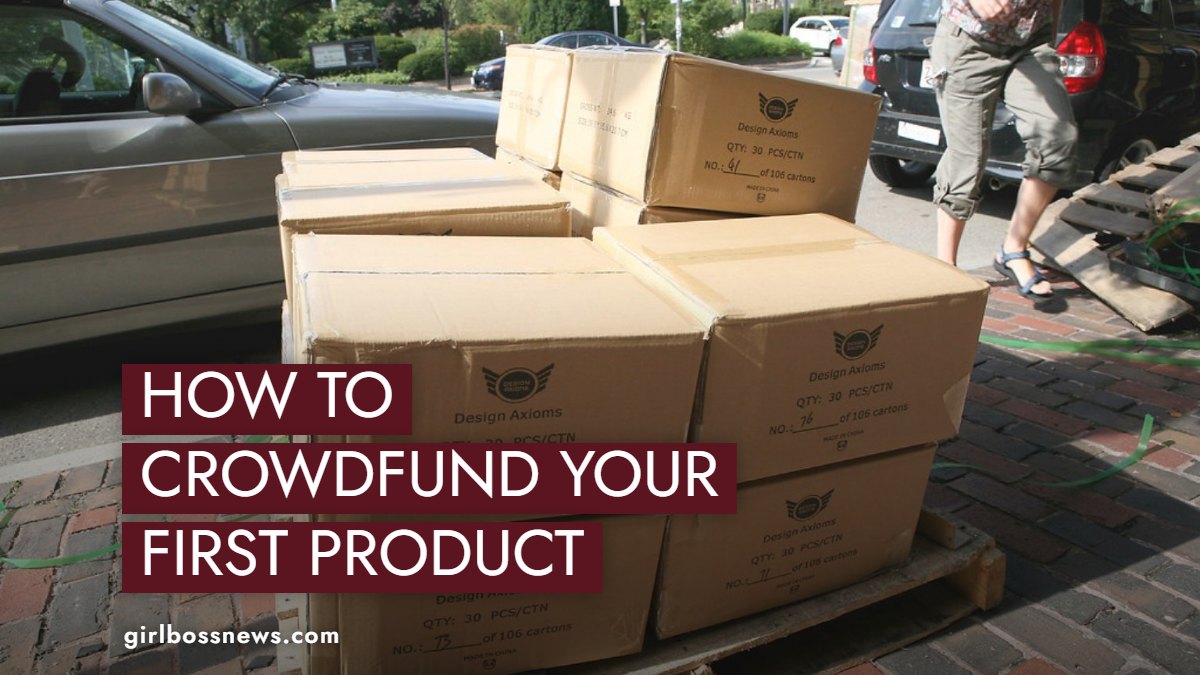
Crowdfunding moves roughly $17.2 billion a year in North America, split between two very different offers, according to Fundera data cited in Lioness Magazine. One path sells a product: give money, get the item, maybe a thank-you perk. The other sells a stake: give money, own a sliver of the company, and share in what it becomes. Reward crowdfunding and equity crowdfunding can look like the same button on the same kind of landing page. They are regulated, taxed and structured in entirely different ways. Knowing which one you are actually running decides what you owe your backers, and what the law requires of you.
Rewards or equity which one fits your product
Start here. If you are preselling a physical product and backers want the thing, not a piece of your company, you want reward crowdfunding. If you are raising capital and offering a stake, you are doing equity crowdfunding, and the SEC has opinions about how you do it.
| | Rewards crowdfunding | Equity crowdfunding |
|---|---|---|
| Platforms | Kickstarter, Indiegogo | Wefunder, StartEngine, Aequitas Invest (AQi) |
| What backers get | A product or perk, not equity | A stake in the company's future, through SEC Regulation Crowdfunding |
| Who can back it | Anyone | Nonaccredited investors are allowed under Regulation Crowdfunding |
| Must run through | The platform directly | An SEC-registered broker-dealer or funding portal |
| Typical fees | Indiegogo charges a 5% platform fee plus 3% and $0.20 per payment, and nothing if the goal isn't met; on a $10,000 raise, that nets about $9,180 | AQi's success fee is 6.5%; Wefunder's private rounds take a 10% SPV fee capped at $10,000, plus 5% from each investor and 10% carry |
| Raise cap | Set by the platform, not federal law | $5 million per company every 12 months |
One housekeeping note: Indiegogo moved to new, Gamefound-powered technology on October 16, 2025, and Flexible Funding, the option to keep whatever you raised even short of the goal, is gone for new campaigns. Only Fixed Funding is offered now, so a stalled campaign returns nothing.
The SEC rules that govern equity crowdfunding
Equity crowdfunding exists because of one law and runs on seven main rules.
- Reg CF (Regulation Crowdfunding) was created after the 2012 JOBS Act specifically to let nonaccredited investors, not just the wealthy or institutional, invest in private, early-stage companies.
- A company can raise up to $5 million through Reg CF in any 12-month period. Because raises are rolling, that same $5 million cap resets and can be raised again the following year.
- Individual nonaccredited investors face their own limit on how much they can put into Reg CF offerings across every platform, in any 12-month period.
- The raise has to run through an SEC-registered broker-dealer or a registered funding portal, online, not through a company's own website.
- Issuers must disclose financial and business information in filings with the SEC, and separately to investors and to the intermediary running the offering.
- Securities bought through a Reg CF raise generally can't be resold for one year.
- Offerings are subject to 'bad actor' disqualification, which can bar people with certain legal or regulatory histories from raising money this way; the SEC's own compliance guide and guidance for issuers walk through the details.
A Reg CF platform built only for women led businesses
One example of how this plays out: Aequitas Invest, known as AQi, lets businesses that are at least 50% women owned raise capital through Reg CF. It launched in 2024 to help female entrepreneurs reach everyday investors by simplifying the regulatory disclosures and paperwork that usually require a lawyer. It is a member of FINRA and has passed federal vetting. Of the roughly 50 active Reg CF platforms in the U.S., Aequitas Invest says it is the only one founded by, owned by and exclusively serving women.
Its structure is worth noting even if you use a different platform. AQi pools its Reg CF investors into a single line on a company's cap table using special-purpose vehicles, often with one lead investor managing voting rights on everyone's behalf, so a founder isn't negotiating with dozens of small shareholders individually. Co-founder Amie Konwinski says that where venture capitalists often want board seats, veto rights and up to 20% equity, founders raising through Aequitas Invest typically give up only 5% to 10%. As of May 2026, the platform had a pipeline of 20 businesses, had closed its first campaign, and had two more campaigns launching in the weeks that followed.
The real appeal isn't just the money
Here's the part worth sitting with. A venture capitalist asking for a board seat and a fifth of your company isn't being unreasonable, that's the price of a big check. But it does mean someone else is now in the room for every decision. Equity crowdfunding's real pitch to a founder isn't the dollar amount, which tends to be modest. It's keeping the company hers while still bringing in people who believe in it enough to put money behind it.
What separates a funded campaign from one that stalls
The data points to habits, not luck.
- Have a real case, not just a product. Attorney Jenny Kassan says crowdfunding can work for nearly any business as long as there is a clear business model and a genuinely compelling reason the business needs to exist.
- Build your list before launch. Crowdfunding projects average 47 backers, but fully funded projects average 300. That gap is most of the game.
- Set a realistic goal. Successful campaigns raise an average of $28,656, not a windfall.
- Expect the odds to be against you. The average success rate across crowdfunding campaigns is 22.4%, so plan for a shortfall, not just a win.
- If you're a woman choosing between a crowd and a handful of VCs, consider the crowd seriously. Kassan says women tend to perform better with regulation crowdfunding than when limited to raising from institutional, professional investors.
The lesson worth keeping
Forty seven backers is an average project. Three hundred is a funded one. The difference isn't a bigger idea, it's a bigger list, built before the campaign ever goes live.
Quick answers
What is the difference between rewards and equity crowdfunding
Rewards platforms like Kickstarter and Indiegogo exchange a pledge for a product or perk. Equity crowdfunding under SEC Regulation Crowdfunding exchanges investment for a stake in the company, and has to run through an SEC-registered broker-dealer or funding portal.
How much can a company raise through equity crowdfunding
Up to $5 million in any 12-month period, and because Reg CF allows rolling raises, that cap can be hit again the following year.
What percentage of crowdfunding campaigns actually get funded
About 22.4%. Successful campaigns raise an average of $28,656 and draw around 300 backers, compared with the 47-backer average across all campaigns.
Sources
- They Saw Women Shut Out Of VC, So A PayPal Veteran And Former Navy Officer Built An Alternative
- Crowdfunding Trends Continue To Show Success For Women Founders - Lioness Magazine
- SEC.gov | Regulation Crowdfunding
- Fees - Indiegogo Knowledge Base
- What changed with the Platform Upgrade? - Indiegogo Knowledge Base
- help.wefunder.com